
Singapore to Delhi: Your Complete eVisa & First-Time Traveler's Guide
Complete guide for first-time travelers from Singapore to Delhi. Learn eVisa process, direct flights, what to expect, where to stay, practical tips, and insider knowledge for an unforgettable Delhi experience.
You've been dreaming about experiencing India, and Delhi keeps coming up in your conversations with friends and colleagues. As someone living in Singapore, you might wonder: Is Delhi a good first destination? How do I actually get there? What will I realistically experience as a first-timer? How straightforward is the visa process? What should I pack? What are the real costs?
This guide answers every question you'd have about traveling from Singapore to Delhi for the first time. You'll learn exactly what to expect, how to prepare, how to apply for your India eVisa as a Singaporean resident, what to see and do, and practical tips that make your first Delhi experience genuinely memorable rather than overwhelming.
Delhi isn't just India's gateway—it's one of the world's most fascinating cities, combining ancient history, vibrant culture, extraordinary food, and modern energy. And getting there from Singapore is simpler than you might think.
Why Delhi for Your First India Trip?
If you're traveling to India for the first time, Delhi makes exceptional sense as your entry point. Here's why thousands of Singaporeans choose it as their first stop.
Accessibility
Direct flights from Singapore's Changi Airport land you in Delhi within 4 hours. You can leave Singapore on a Friday evening and be exploring Old Delhi's chaotic markets by Saturday morning. No long layovers, no complicated connections, just a straightforward journey to one of Asia's most vibrant cities.
The Gateway Advantage
Delhi is India's primary entry point, meaning the infrastructure is built around international travelers. Immigration is organized, money exchange is straightforward, transportation options are abundant, and people in the tourism industry speak English and understand what first-time visitors need.
Historical and Cultural Richness
Delhi isn't just a starting point—it's a complete destination. Ancient monuments sit beside modern metro stations. Medieval fort walls stand near contemporary art galleries. You can move between centuries just by changing neighborhoods. For a first-timer, this diversity is exactly what makes India fascinating.
Manageable Urban Environment
Delhi is large and bustling, yes, but it's more navigable than Mumbai and less chaotic than some other major Indian cities. The metro system is excellent, neighborhoods are distinct and accessible, and you can build a logical itinerary without feeling lost.
Food Culture
Delhi's food culture is arguably the best entry point to Indian cuisine. Street food is legendary and accessible. Restaurants range from ultra-casual to fine dining. You'll eat better meals for less money than in Singapore, while avoiding extreme spice levels if that's a concern for you.
Getting Your India eVisa as a Singaporean: The Complete Process
As a Singapore resident, you have direct access to India's eVisa system—no embassy visits, no complicated paperwork, just an entirely online process.
Understanding Your eVisa Options
India offers two main eVisa categories relevant for first-time travelers from Singapore: the Tourist eVisa and the Business eVisa. For your first Delhi trip, the Tourist eVisa is almost certainly what you need.
The Tourist eVisa is designed for leisure travel, sightseeing, and cultural exploration. You're not permitted to work, conduct business, or be paid for any activities—but everything else is fair game. You can sightsee, visit museums, taste food, photograph monuments, visit friends, and generally experience Delhi and India as a visitor.
Duration Options
- 30-day single-entry eVisa — Valid for 30 days, enter once. Once you leave India, you can't re-enter on this visa. For a first trip, this is often enough.
- 1-year multiple-entry eVisa — Valid for 12 months, enter multiple times, stay up to 90 days per visit. Best if you think you'll return within the year.
- 5-year multiple-entry eVisa — Valid for 5 years, unlimited entries, 90 days per visit. The most flexibility for future trips.
For a first-timer planning a 1-2 week trip, the 30-day eVisa is perfectly adequate and the most economical choice.
Your Step-by-Step eVisa Application
Step 1: Prepare Your Documents
Gather these before starting:
- Your Singapore passport (should be valid for at least 6 months beyond your intended return date)
- A scanned color copy of your passport's biographical page
- A recent color passport photo (taken within the last 3 months, white background)
- Your email address
- Your phone number
- Your intended travel dates
Take 5 minutes to organize these. Clear, readable scans prevent rejections.
Step 2: Visit the Official eVisa Portal
Go to India's official eVisa website. The interface is in English, designed for international applicants, and relatively straightforward. You don't need to search for a "Singapore portal"—one system handles all nationalities.
Step 3: Fill Out Your Application
You'll enter:
- Full name (exactly as on your passport)
- Date of birth
- Your passport number and expiry date
- Nationality (Singapore)
- Current address (your Singapore address is fine)
- Email and phone number
Be precise. Discrepancies between your passport and application cause rejections. Copy information directly from your passport rather than relying on memory.
Step 4: Select Your Visa Type
Choose "Tourist eVisa" for your first trip.
Step 5: Choose Your Duration
Select either 30-day, 1-year, or 5-year validity based on your plans. For a first-timer, 30 days is standard.
Step 6: Provide Travel Details
Enter:
- Your intended arrival date in India (your flight landing date)
- The city where you'll arrive (Delhi)
- Your intended departure date (be conservative—it's better to underestimate than overstay)
- Purpose of visit (tourism)
Step 7: Upload Your Documents
Upload your passport scan and photo. The system confirms file format and size. If rejected:
- Ensure files are JPEG, PNG, or PDF
- Keep file size under 5MB
- Use color, not black and white
- Ensure images are sharp and readable
Step 8: Review Everything
Before submitting, check that:
- Your name matches your passport exactly
- Your passport number is correct
- Your dates make logical sense
- Your email is correct (this is where your approval arrives)
Take 2 minutes here. Errors at this point require reapplication.
Step 9: Pay the Visa Fee
The system presents payment options. eVisa fees are in US dollars. You'll pay via credit or debit card. For current pricing, check our visa fees page.
Step 10: Receive Your Approval
Within 4-5 working days (standard) or 2-3 days (expedited), you'll receive an email with your approved eVisa as a PDF. Print it. That's your official authorization to enter India.
Flights: Getting from Singapore to Delhi
Direct flights make this journey effortless. Changi Airport has multiple daily flights to Delhi's Indira Gandhi International Airport.
Flight Duration: 4 hours (the most time-efficient way to cover 3,000+ kilometers)
Airlines Operating This Route
- Singapore Airlines (premium service, slightly higher cost)
- Air India (Indian national carrier, good reliability)
- Scoot (budget option, decent service)
- IndiGo (Indian carrier, competitive pricing)
Booking Strategy for First-Timers
Book 4-6 weeks in advance for the best prices. Early morning or late-night flights are typically cheaper than afternoon departures. Flying midweek (Tuesday-Thursday) is cheaper than weekends.
For your first trip, I'd recommend Singapore Airlines if budget allows—the smooth service and complimentary meal makes the journey relaxing. If you're budget-conscious, Air India offers excellent value. Scoot and IndiGo are fine if you're traveling light and comfortable with no-frills flying.
What to Expect at Delhi Airport
Indira Gandhi International Airport is modern, organized, and relatively straightforward. Immigration queues move steadily. Present your printed eVisa and passport, they scan your document, and you're through in minutes. The baggage claim is efficient, taxi/ride-share pickups are clearly marked.
The airport is about 20 kilometers from central Delhi. A pre-booked taxi or Uber takes 30-45 minutes depending on traffic. Budget around SGD 25-35 for transportation to your hotel.
Planning Your First Delhi Experience
A first-timer to Delhi typically has 3-7 days. Here's a realistic framework.
Days 1-2: Acclimate and Explore Old Delhi
Day 1 Arrival
Your flight lands mid-afternoon or evening. Head to your accommodation (I recommend staying in South Delhi or Central Delhi for your first visit—easier to navigate than Old Delhi initially). Freshen up, grab dinner near your hotel, and get some sleep. Jet lag will hit you—expect to wake at 4-5 AM on your first night. That's normal. Get breakfast, rest, and you'll adjust by day 2.
Day 2: Old Delhi
Old Delhi is overwhelming and absolutely essential. The narrow lanes, the history, the sensory intensity—this is the India that comes alive in stories. Hire a guide through your hotel (budget 2,000-3,000 INR / SGD 35-50 for 4 hours) rather than navigating alone your first time.
Key stops:
- Jama Masjid — India's largest mosque. Stunning architecture, spiritual atmosphere, incredible views from the top.
- Red Fort — Mughal-era fortress with a tangible sense of history
- Chandni Chowk — The chaotic, amazing bazaar that's been a commercial center for centuries
- Paranthe Wali Gali — A narrow lane famous for stuffed flatbreads. Stop for lunch here.
Days 3-4: Central and South Delhi
New Delhi
New Delhi is the British-era planned city that feels less chaotic than Old Delhi. Wide boulevards, organized neighborhoods, museums, and gardens.
- India Gate — The iconic monument, impressive at sunset
- National Museum — Actually world-class. Spend 2-3 hours here.
- Rashtrapati Bhavan and Mughal Gardens — Presidential residence and gardens (open to public certain months)
- Parliament House — Architectural marvel
South Delhi
This is where you'll find modern cafés, bookshops, art galleries, and upscale restaurants. Areas like Hauz Khas, Defli Haat, and Khan Market are where affluent Delhiites spend time.
Day 5+: Deeper Exploration
If you have a week, expand beyond Delhi:
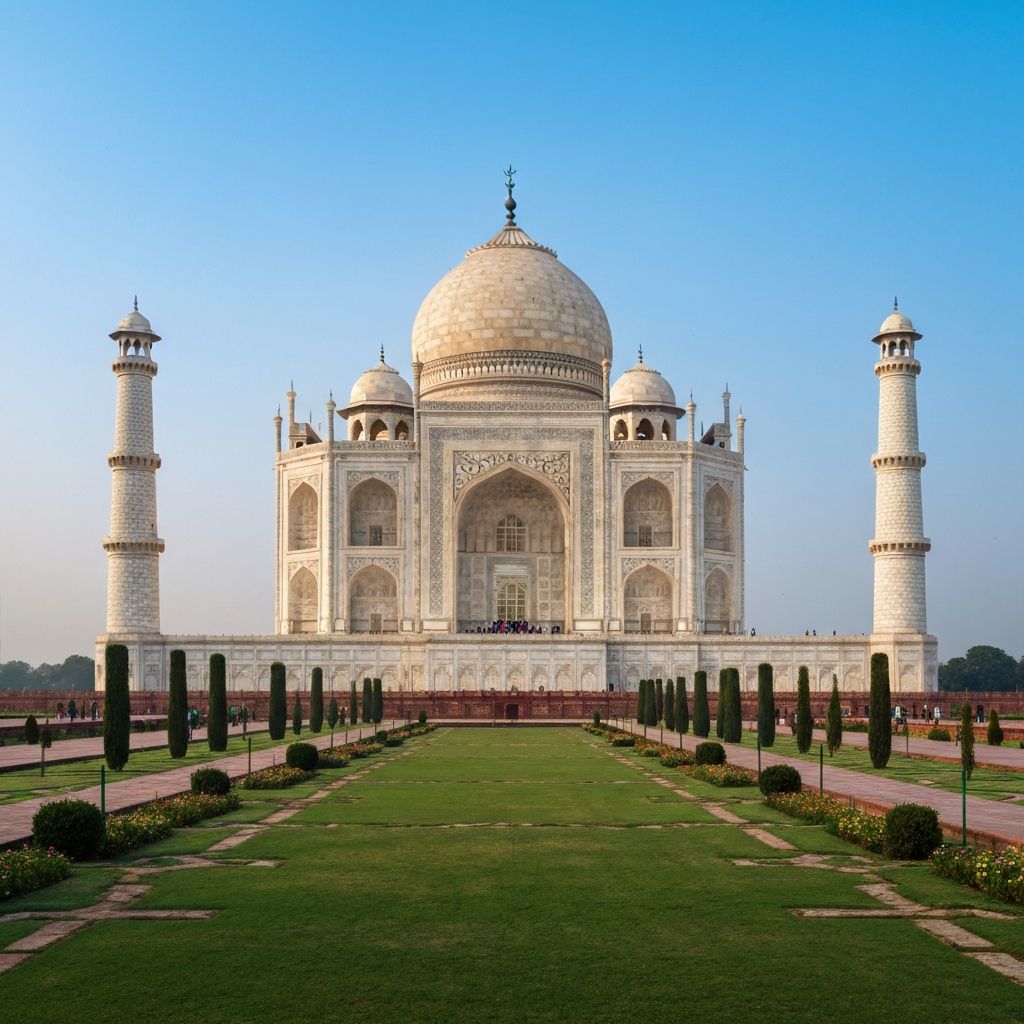
- Agra (3-hour train or flight): The Taj Mahal and Agra Fort—essential India experience
- Jaipur (4-5 hour drive): Pink City, incredible palace, Hawa Mahal
- Mathura/Vrindavan (2.5-hour drive): Spiritual centers with temples and Krishna heritage
Or stay in Delhi and explore neighborhoods you've missed, take a cooking class, visit art galleries, or simply slow down and absorb the city.
Practical First-Timer Tips
Money and Costs
Budget roughly SGD 50-80 per day for accommodation in a decent mid-range hotel, SGD 5-10 per day for food (even at good restaurants), and SGD 20-30 per day for sightseeing and transportation.
Total for 1 week: approximately SGD 1,000-1,200 including flight, eVisa, accommodation, food, and activities. This is substantially cheaper than comparable travel in Southeast Asia.
Currency Exchange: Withdraw Indian Rupees at the airport or exchange SGD to INR at your bank before departure for slightly better rates. Rupees are essential in Old Delhi and smaller establishments, though major hotels and restaurants accept cards.
Health and Safety
Delhi is safe for tourists following common-sense precautions. Avoid displaying expensive jewelry or equipment. Stick to well-traveled areas, especially at night. Drink bottled water (tap water isn't dangerous but upsets unfamiliar stomachs). The healthcare is excellent if you need it—modern hospitals with English-speaking staff.
What to Pack
- Light, breathable clothing (cotton, linen—Delhi heat is intense)
- Comfortable walking shoes that can handle dusty streets
- Hat and sunscreen (sun is intense)
- Modest clothing for temples (shoulders and knees covered)
- Basic medications (paracetamol, antacid, motion sickness tablets)
- Phone charger and power adapter
- Small towel or handkerchief (useful everywhere)
- Sunglasses
Language and Navigation
English is widely spoken in tourist areas. Learning "thank you" (dhanyavaad), "yes" (haan), "no" (nahi), and "how much?" (kitna?) will win smiles from locals. Google Maps works reliably. Uber is available throughout Delhi and costs SGD 2-5 for most trips within the city.
Food and Eating
Delhi's food culture is extraordinary and one of your trip's highlights. Eat street food (it's generally safe, and locals know which vendors are reliable). Try:
- Chaat — Savory snacks (pani puri, aloo tikki)
- Tandoori — Meat or vegetables cooked in a clay oven
- Biryani — Fragrant rice dish
- Dosa — South Indian crepe
- Lassi — Yogurt-based drink
Eat where locals eat, not where guidebooks point. Your hotel staff will give you better recommendations than any tourist guide.
Common Questions About Your First Delhi Trip
Q: Is Delhi safe for first-time travelers from Singapore?
Yes, with normal precautions. Delhi is busier and more intense than Singapore, but perfectly safe for tourists. Avoid very late-night wandering alone, stay in established tourist areas, and trust your instincts. You'll see other tourists everywhere—you're not alone.
Q: How much time should I spend in Delhi vs. exploring other parts of India?
For your first trip: 3-4 days in Delhi, then 3-4 days elsewhere (Agra and Jaipur are the obvious choices). This gives you time to acclimate to India while maximizing your exposure.
Q: What's the visa situation if I want to stay longer than 30 days?
You can apply for a longer Tourist eVisa (1-year or 5-year) before traveling. Or you can apply for the Business eVisa, which allows stays up to 180 days per visit.
Q: Can I extend my eVisa while in India?
No. eVisa extensions don't exist. You must exit India before your visa expires and re-enter if needed on a new eVisa.
Q: What if I want to travel to other Indian cities from Delhi?
Domestic flights within India are cheap (SGD 30-50) and frequent. Trains are an iconic Indian experience—slower but atmospheric. Buses connect most cities. All options are straightforward and well-established for tourists.
Q: Is Delhi expensive compared to Singapore?
No. Delhi is 40-60% cheaper than Singapore for accommodation, food, and activities. Quality restaurants cost SGD 8-15 per meal. Hotels range from SGD 20/night budget to SGD 80/night mid-range.
Q: What's the weather like in Delhi?
Extremely hot (March-May: 35-45°C), monsoon humid (June-August), pleasantly warm (September-October), cool and dry (November-February). October-November is peak season—pleasant weather and comfortable for first-timers. If you travel during this period, you may also experience India's festival season. Diwali (typically November 8 in 2026) transforms Delhi spectacularly. For comprehensive planning around festival-season travel, see our detailed guide to festival season and Diwali travel.
Q: Do I need travel insurance?
Not required, but highly recommended for any international travel. Annual travel insurance in Singapore is affordable and covers unexpected medical costs, trip cancellation, and evacuation.
Q: How is the internet/mobile in Delhi?
Excellent. Get an Indian SIM card at the airport (jio or airtel), or use your Singapore mobile's roaming (more expensive). WiFi is available at hotels, cafés, and restaurants.
From First-Timer to Repeat Visitor
Your first Delhi trip will likely leave you wanting more. Many travelers who begin in Delhi fall in love with India and return multiple times. The eVisa system supports this—you can apply for a 1-year or 5-year visa for future trips, or simply apply for new eVisas each time you want to return.
For subsequent trips, you might explore extended stays using multiple eVisa entries, combine different Indian cities, or dive deeper into specific experiences like wellness retreats or business travel.
Your Next Steps
You now have everything needed to plan your Singapore-to-Delhi journey. Here's the practical sequence:
- Check your passport: Ensure it's valid for 6+ months beyond your intended return date.
- Choose your dates: Pick your travel dates (October-November is ideal for weather; avoid March-May heat if it's your first time).
- Book your flight: 4-6 weeks in advance for best pricing.
- Apply for your eVisa: Submit your application at least 2 weeks before departure. 1 week is possible but riskier.
- Book accommodation: Hotels in South Delhi (Hauz Khas, Nehru Place) or Central Delhi (near India Gate, Khan Market) are ideal for first-timers.
- Notify your bank: Tell your Singapore bank you'll be traveling to India so they don't block your card.
- Pack and prepare: Follow the packing list above, download offline maps, and save essential contacts.
- Arrive and explore: You're ready for one of the world's most rewarding first travel experiences.
Delhi awaits. The eVisa process is straightforward, flights are direct, costs are low, and the rewards are immense. First-timers to India almost always look back on their Delhi trip as life-changing. Yours likely will be too.
Ready to take the leap? Start your India eVisa application today, or contact us if you have questions about the process.
Ready to Visit India?
Get your India eVisa quickly and easily with our expert assistance